

Humanin
Humanin
Bionk Peptides delivers high-performance research compounds engineered with uncompromising attention to detail. Every vial is produced to exceed 99% purity and supplied in lyophilised powder form, preserving molecular integrity while ensuring optimal stability and precision in application. Bionk Peptides are commitment to elevated research performance. For laboratory research only. Not for human use.
Couldn't load pickup availability
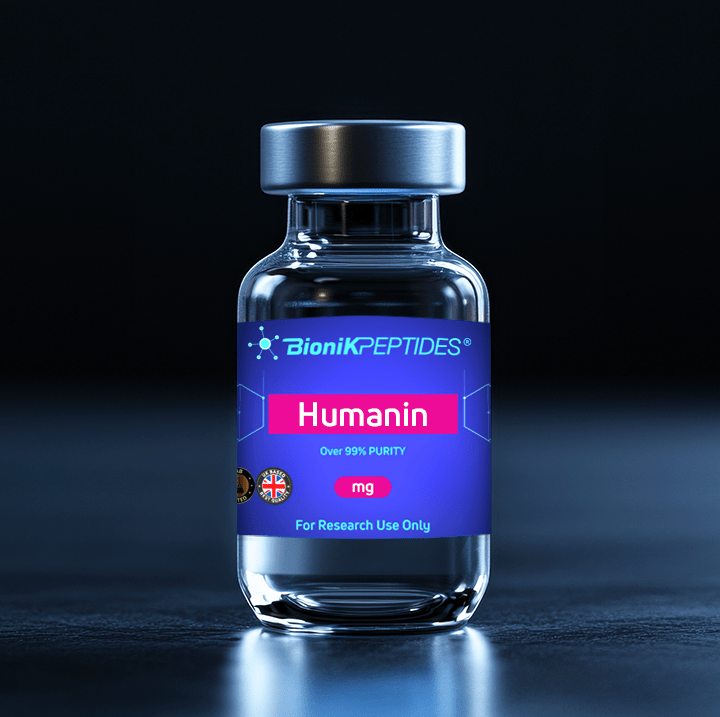
Description
Humanin
Humanin is a small 24-amino-acid peptide encoded by the mitochondrial genome and is studied for its role in cellular stress-response mechanisms. Research suggests that Humanin may be involved in pathways associated with cellular protection, oxidative stress and regulation of cell survival.
In laboratory studies, Humanin is investigated for its interactions with mitochondrial function, signalling pathways and cellular stress responses. Experimental models may examine its potential effects on oxidative damage, apoptosis-related pathways and mitochondrial homeostasis.
Humanin is therefore of interest in mitochondrial biology, molecular research, ageing-related studies and peptide research, particularly for understanding how cells respond to metabolic and oxidative stress.
Laboratory Research Data Analysis
- Cellular Stress Resistance: Laboratory models demonstrate that humanin protects cells against oxidative stress, hypoxia, serum starvation, and ischemia-reperfusion injury
- Neuroprotection: Studies show it attenuates amyloid-beta-induced neurotoxicity and oxidative stress, offering potential implications against Alzheimer's disease and age-related cognitive decline.
- Metabolic Regulation: Animal and cellular studies indicate it improves metabolic parameters, assists in modulating insulin resistance, and supports mitochondrial function
- Longevity Association: Higher circulating levels of humanin correlate with better healthspan and increased lifespan in model organisms like worms and mice, as well as familial longevity in human cohorts.

